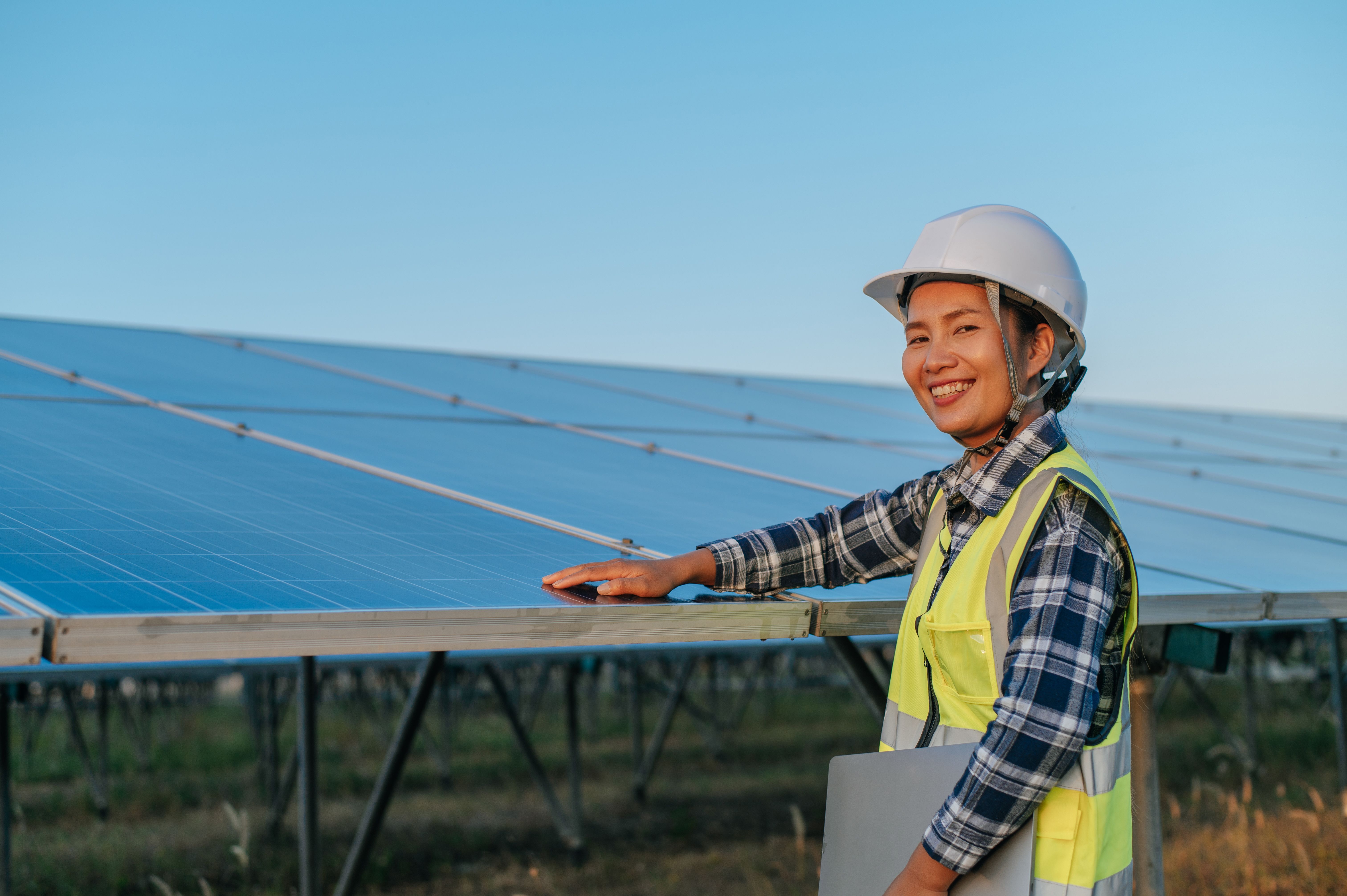
For professionals, this translates to one of the most secure and rapidly expanding career tracks in the country. Whether you are working with your hands on a rooftop or managing power flows on a national grid, here is a breakdown of the solar energy value chain and the high-paying careers within it.The Solar Value Chain: Where Do You Fit?The solar industry requires a massive ecosystem of diverse talents. It is not just for electrical engineers; it demands sales experts, project managers, and data analysts.1. Commercial & Business Development (The Originators)Before a single solar panel is installed, someone has to sell the financial and environmental benefits to a client. With the introduction of CRESS, corporate clients are rushing to secure long-term Power Purchase Agreements (PPAs) to meet their ESG targets.In-Demand Roles: Corporate Account Executive (Renewables), Solar Sales Consultant, PPA Structuring Manager.Key Skills: B2B sales, financial modelling (calculating ROI and payback periods), and a deep understanding of Malaysian energy policies and carbon tax implications.2. Engineering & Design (The Architects)Once a contract is signed, the system must be meticulously designed to maximise energy yield while adhering to strict safety standards.In-Demand Roles: Solar PV Design Engineer, Yield Analyst, Grid Interconnection Engineer.Key Skills: Proficiency in simulation software like PVsyst or AutoCAD, electrical single-line diagram (SLD) design, and knowledge of SEDA (Sustainable Energy Development Authority) regulations.3. Construction & Project Management (The Builders)This is where the blueprints become reality. With LSS6 rolling out nearly 2GW of new utility-scale solar capacity, Engineering, Procurement, and Construction (EPC) companies are aggressively hiring leaders to manage these massive ground-mounted and floating solar farms.In-Demand Roles: Solar Project Manager, Site Supervisor, QA/QC Engineer.Key Skills: End-to-end project lifecycle management, contractor negotiation, and stringent Health, Safety, and Environment (HSE) compliance.4. Grid Management & O&M (The Guardians)A solar farm has a lifespan of 25+ years. Ensuring it operates at peak efficiency every single day is a highly technical challenge. Furthermore, as more solar energy enters the national grid, managing the intermittent nature of sunlight is critical.In-Demand Roles: O&M (Operations & Maintenance) Engineer, BESS (Battery Energy Storage Systems) Specialist, SCADA/IoT Data Analyst.Key Skills: Troubleshooting electrical faults, drone-assisted thermal imaging (to detect faulty panels), and expertise in battery storage integration—which is the fastest-growing niche in 2026.Why Pivot to Solar in 2026?If you are weighing your career options, the renewable sector offers distinct advantages:Unprecedented Job Security: Energy is recession-proof. As Malaysia phases out coal by 2044, the reliance on solar professionals will only compound.The "Green Premium" in Salaries: Because the industry is growing faster than universities can produce specialised graduates, companies are paying a premium to poach talent from traditional Oil & Gas or construction sectors.Meaningful Impact: You are directly contributing to Malaysia's decarbonisation and the global fight against climate change.Action Plan: How to Enter the Solar IndustryYou do not need to start your career over to enter the solar sector; you simply need to bridge the knowledge gap.Get SEDA Certified: For engineers, obtaining a Grid-Connected Photovoltaic (GCPV) design certification from SEDA is the gold standard. It instantly elevates your CV to the top of the pile.Learn the Policy Landscape: Even if you are applying for an HR or Finance role within a solar company, you must understand the terminology. Familiarise yourself with terms like LSS6, Solar ATAP, CRESS, and the SolaRIS rebate scheme.Target the Right Employers: Look beyond just TNB (Tenaga Nasional Berhad). Research aggressive EPC players and local champions like Solarvest, Sols Energy, Plus Xnergy, and Cypark Resources.ConclusionThe transition from fossil fuels to renewable energy is the defining industrial shift of our generation. By entering the solar energy sector in 2026, you are not just securing a job; you are securing a foothold in the future of Malaysia’s economy. From rooftop installations to nationwide grid management, the opportunities are vast and waiting for you.Whether it will be your first job or a career change, make sure your resume is up-to-date with the help of our resume checklist.When you’re ready, kickstart your career with jobs on Hiredly today!